One summer, I was no older than eleven, I happened across a title in the app store that caught my eye.
“Ascendancy?”
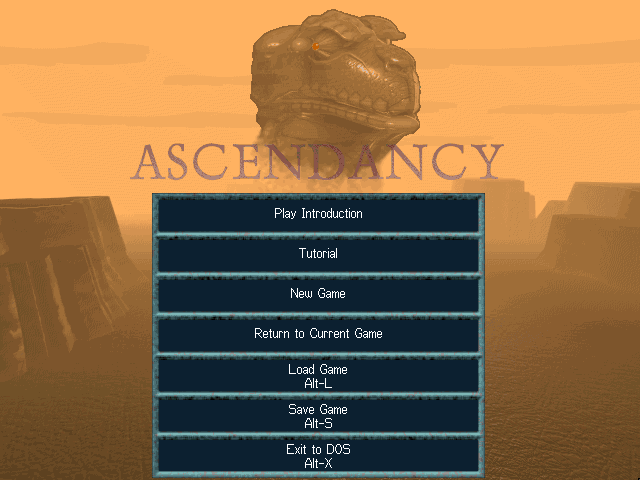
With a price tag reading “Free,” how could I not? I was quickly sucked in by the game’s atmosphere, audible from just the title screen alone. A foreboding synth, buzzing and pulsing, the echoes of something walking down a metal corridor, rising synths, and then- is that a clarinet? I can’t tell, but it brings in this new element, almost mystical and ancient. Then the strings, rising and falling. All of these themes spiral together to tell you exactly what this game feels like; the vast unknown of space, cultures with impossibly long histories, and an epic scale. A lizard-like, low-poly alien overlooks a desolate expanse, just what will happen?

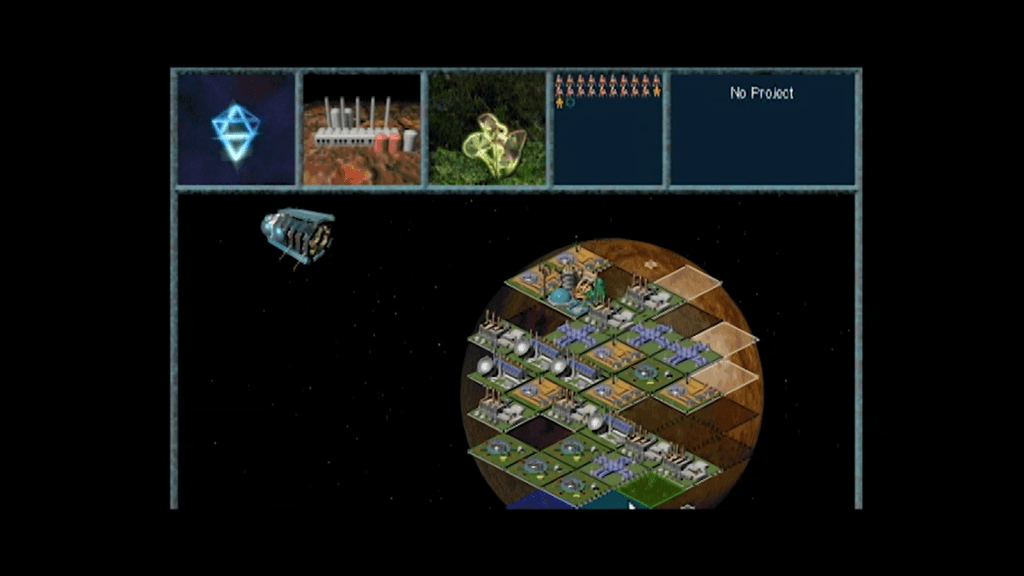
I had no idea that what I was playing was a (now deleted) port of a classic PC game. Developed by The Logic Factory and published by Virgin Interactive in 1995 for DOS, Ascendancy is a 4X game. That stands for eXplore, eXpand, eXploit, eXterminate, and you do just that. You take control of one of twenty alien races. Each one has multiple paragraphs of lore, and a unique ability. After setting the size and population of the galaxy, you’re dropped into your home world, where you need to build structures to enhance one of three areas. Factories raise your industry and let you complete building projects faster, research centers raise, well, research, and speed up your scientific advancements, and farms raise the rate your population grows at.
Once you’ve built up a decent planet and researched space travel, you can enter your true space age. The ship building interface is more fun than it has a right to be, for how simple it is. You outfit it with a star drive for inter-system travel, engines, armor, weapons, and utility devices, all at your own discretion. From there you set about conquering the galaxy, colonizing planets and coming into contact with your neighboring species.
Ah, the other races. This is where Ascendancy unfortunately starts to show its faults. While the actual variety is staggering, and I could read about these weird creatures all day, the AI is… problematic, to say the least.
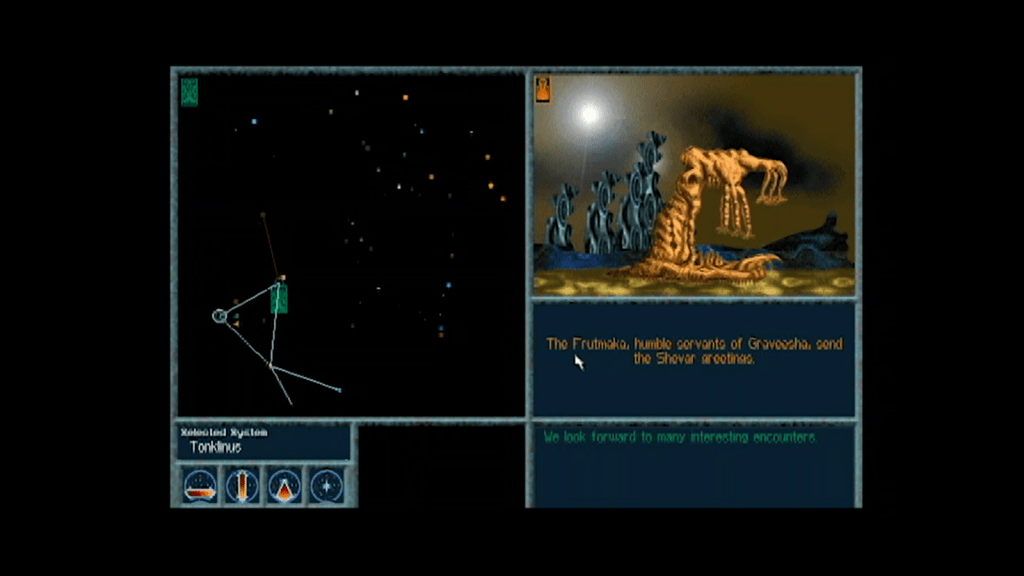
When Ascendancy first released, it drew criticism for being far, far too easy, with passive AI that wouldn’t dare put up a fight no matter how badly you’ve prepared for war. To solve this, Logic Factory released a patch for the game: Antagonizer. This dramatically upped the aggression of the artificial intelligence, but maybe too much. Once you make contact, you’re given several options to respond to the other race, ranging from “Goodbye” and “We declare war!” to “Let’s share research/star lane maps!” However, try as you might, none of the species ever seem to want anything to do with you. You exhaust every dialogue option to no avail until you bid farewell, then five minutes later they’ve declared war on you. Then, sometimes, after five more minutes of never even seeing your new nemesis, they offer a peace treaty.
Ascendancy gets close, it gets really close, to making it. The thing that turns a good game into a great game, and a hidden gem to a criminally overlooked classic. I often feel like I’m struggling to interact with the rest of the game.
Ultimately, while I have my gripes with it, and parts of the game leave me unsatisfied, I can’t tell you not to play Ascendancy. The building is fun; the graphics, while primitive and quirky (I mean just look at the Baliflids), are charming; the music, somewhere between ambiance and inspiring, is engrossing. There’s something undeniably special about this game, all these elements coming together. There’s a sci-fi nerd in me that loves to get lost in this galaxy, popping in for a quick session every now and again to soak in the atmosphere, colonize some planets, and conquer the stars.
 Taigen Moon Works