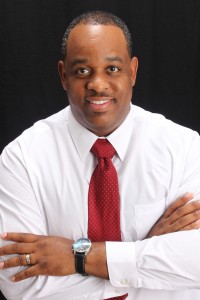
Transcripts from an interview with Texas Southern University’s Dr. Howard Henderson, mainly concerned with over-incarceration. Henderson is a published social researcher whose area of study focuses on the prison system; he is also the founder of the Center for Justice Research and has earned a PhD in Criminal Justice from Sam Houston State University. Some statements have been abridged.
In a developed nation like America, how do we end up with mass incarceration?
“There are several factors that contributed to the current state of incarceration. Looking at its history, incarceration was meant to exclude people from society who could not function in it; they were threatening the day-to-day lives of normal citizens. Over time, it became a place to control and manage– what I’ll call– ‘surplus population,’ people whom society had not been able to identify as having a function.
If you look at the history of the police, they were designed to protect the property of the ruling class, and so began to target behavior the ruling class deemed inappropriate. Over time, you develop stereotypes that police can identify, and minority groups become the ones more likely to be incarcerated. The reality is, the minority group has changed over time, and only within the last thirty to forty years has it become predominantly African American. The roots of that trace all the way back to a practice called ‘convict leasing’ which was done after slavery that involved plantations to get workers when they could no longer buy slaves.”
How does over incarceration impact the community?
“When you take a significant number of individuals out of a community, you destroy that community’s ability to be productive. Especially when males make up so much of that number, you’re missing out on a few things, procreation for one. You’re also losing the role of a father in the community.”
When the justice system perpetuates this cycle, is it being done consciously? Is there an intent to have this effect?
“For the overwhelming majority of people, it’s subconscious. We’ve created a system where we believe that this is just the way that offenders should be treated. I can honestly say that I don’t believe it is deliberate on the part of individuals, but I do think that there are some individuals who do believe this consciously. For some of them, they just believe that it’s the right way to control offenders, but there are people who consciously believe it who you would find in these fringe groups we call ‘hate groups.’ Those individuals, who I do believe are in the minority, do exist, but for the most part, most people are just doing what they’ve been taught– that this is the right way for the justice system to operate.
What is deemed criminal is often socially conditioned, take marijuana possession for instance. It was illegal not because there was sufficient evidence that it harmed society, but because of the belief that it did, unlike murder, which we can all agree is harmful to the community.”
I’m certain that if you asked most people working in the justice system what they believed, they would probably give you some reasonable, progressive answers, but that’s when you think about these things, and when you aren’t thinking, these other implicit ideas are what you express in your actions.
“If you examine something like the preamble to the Constitution, the Founding Fathers were espousing these universal truths that ‘all men are created equal,’ but at the same time were owning slaves. So, you understand the bipolar nature of our system, where we can say these things, but not be held to them.”
Can you explain your research on risk assessment?
“When I was working as a corrections officer, I became interested in how we determine who should receive a term of incarceration. At the time, and still today, the prison system uses instruments that are meant to predict an individual’s risk of re-offending a crime. My research was focused on how accurate these instruments are for predicting re-offense, controlling for any racial/ethnic bias. Most people forget about the potential for bias because they believe that if an instrument is good for one group it’s good for everyone, but what we found was that there is actually a level of racial bias in these instruments.
For example, you’re given a ‘weight’ according to your risk level. So, it may ask you how many times you’ve been arrested in the last ten years, but because minority communities are over-policed and arrested more for certain offenses, the instrument gives more weight to them than to a person of another race who lives in a community with different circumstances.”
When you say “instruments,” what are we talking about? Are these equations? Exams?
“They range, there’s all sorts. You have ones that are paper-based, you have digital instruments… We worked on developing one using an iPad that lets us assess an individual’s executive functioning levels and how they make decisions. They range, but keep in mind that you’re using these at every step of the criminal justice system; the police use them, prosecutors use them, judges, parole officers, parole boards, but they don’t understand that these instruments have underlying bias.”
These instruments, you’re saying they’re not uniform across the country?
“No, they’re not. You have so many different ones, most of which have not been externally, objectively evaluated. They tend to be evaluated by the organization that develops them, which is a clear violation of basic research principles. They give people comfort because it removes the stress of an individual’s bias, even though the same bias can be present in the instrument.”
Are these created by the justice system or someone else?
“It depends, a majority of them are outsourced to private, for-profit companies. Some are created by foundations, some are created by government agencies. There is not one instrument that’s adopted by everyone, it’s mostly based on the specific institution and what they want to use. You could have two institutions in the same state looking at the same population using two different instruments.”
And how much variance would you see between two different instruments?
“Again, it depends, but that’s the problem. As a matter of fact, I could take one instrument assessed on one individual, assessed by two different assessors, and come away with two different scores.”
You’ve done some noteworthy research on female inmates, how different are their cases from male inmates?
“Not very. Females are the most understudied group in criminal justice, most of the focus is on males because most areas of crime have few females. However, they’re growing in urban communities.”
How are they growing and under what time frame?
“If you’re looking at the whole country since 1980, you’ll find a 750% increase in female incarceration. Here’s the interesting thing, the rate of female imprisonment has been twice that of males over that time. African American women have twice the rate of White women, Hispanics 1.5, the rate of African American women has actually declined since 2000, but White and Hispanics continue to increase.”
Do we know what factors have caused those shifts?
“Drugs are one of the main factors. Oftentimes, women involved in the criminal justice system are there in conjunction with their partners, but states vary. Women are more likely to be in prison for drug and property crime, and 25% of them have been convicted of a drug offense, where for men it’s only 14%. 26% of incarcerated women are there for property crime, where only 17% of men are.”
Sorry, what is property crime?
“Theft, burglary, versus actually harming someone.”
What does that difference in offense say about the populations?
“Certainly the socioeconomic conditions women face. Wage disparity, I think, accounts for a percentage of that property crime.”
Touching on women and men, how much research has been done on the children of the incarcerated?
“One in twelve children have experienced, at some point in their lives, parental incarceration. People of color represent 37% of the U.S. population, and 67% of the prison population, so the whole notion of family is critical in mass incarceration.
Do the children of incarcerated parents have a higher chance of falling into these “risk categories?”
“They do. Children of incarcerated parents have a whole host of negative consequences; they’re at increased likelihood for aggression and anxiety, delinquency, lots of evidence that points to trauma from the arrest itself. A lot of these kids have been left to fend for themselves for weeks and months after their parent was incarcerated, often they weren’t even there when the arrest happened. They just come home from school to an empty home and left to draw their own conclusion, cook their own food. Some have been forced to watch their parent arrested in front of them.
There’s a national phenomenon towards mass parental incarceration and it’s unique, but it perpetuates all these negative cycles. You aren’t considering how their parent is going to be coming out and reacclimating to society.
One in nine African American kids, one in twenty-eight Hispanic kids, one in six white kids, have an incarcerated parent. Almost half of them are under ten.”
Do we know what the psychological effects are on children?
“Depression, trauma, post-traumatic stress disorder, substance abuse, inadequate education, increased likelihood of poverty, total household inability. Parental incarceration is now recognized as an adverse childhood experience.”
This is a big, sprawling issue. What steps can we take to remediate over-incarceration?
“One, we need to recognize the extent of the problem and get away from national averages being the basis of the conversation. Two, we need to understand the extent that over-incarceration can be mitigated by diversionary programs. Examine police activity, the types of offenses individuals are arrested for; this has been a movement all around the country, police chiefs, judges, prosecutors are beginning to have a conversation about what activities individuals should be arrested for and which should not be. They’re starting with a lot of low-level violence, classroom-type misdemeanors, and work their way around to reclassifying a whole swath of activities that no longer need to be criminal.
We need to have a conversation about how much time is appropriate to punish and rehabilitate someone that will eventually get out. The current research shows us that 95% of all prisoners will get out at some point; if that’s the case, then we have to question ‘What is the role of prison? What is the role of jail?’ and how do we improve rehabilitative efforts while they’re there.”
Is this being done at the national or more state level?
“Ever since the First Step Act was passed, this has been a federal issue. Now you’re seeing states begin to roll this out, local policy makers and governors letting out individuals en masse, refusing to charge for certain offenses. There is a national movement happening, we just need more people to understand the science behind the need of doing this, and show the cost-benefit analysis that tells us we’re better off with some of these people in our community.”
The Center for Justice Research can be found at www.centerforjusticeresearch.org.
 Taigen Moon Works