I want to start off by saying that I love Megaman. I mean it. There’s, like, four things I care about in this world, and Megaman is one of them. I’ve been playing these games since I was nine years old; Megaman is the reason I learned how to use emulators, which has led to a long career of pirating Adobe software.
You might be wondering, “Isn’t The Cellar supposed to be about lesser-known games? Why are you doing one about Megaman 6?” The answer is simple:
Have you ever heard anything good about Megaman 6? If you’re a casual fan of the franchise or only know of it, probably not, and that’s a damn shame. I hold this to be one of the best games in at least the Classic series, definitely the best of the games on NES.
First and foremost, I want to address the common criticism that this game gets. Megaman as a whole caught a fierce case of over-saturation after the first game sold pretty well, and it only got worse as the years went on. After 2, it became a yearly franchise, and as time went on, more and more spinoff series got added to that yearly grind. At a certain point, if you were a Megaman fan, you were buying X8 on the PS2, Maverick Hunter X for PSP, and Zero 4 and Battle Network 5 on GameBoy Advance (they released 3 different versions of BN5). All of these came out in 2005.
Whenever a series has enough sequels, no matter the actual quality of those sequels, they will face audience fatigue. Audiences can often mistake their exhaustion with a product for that product being bad, and that’s the unfortunate hand that this game got dealt. It was the sixth title in a franchise during a time in which people weren’t used to having twenty-seven Assassin’s Creeds. It gets a lot of flak for not innovating with the established formula, especially at the time, because this game came out-
Oh.
Oh, oh man.
This game came out in 1993. Jesus. It isn’t just that it released for the NES two years after the Super Nintendo hit shelves, it’s also the giga-tragedy that it released the same year as a little game called Megaman X. Rubbing shoulders with one of the best games of all time in the same series as you while running on inferior hardware doesn’t get you any flowers, but trust me, you need to take my word if you haven’t played it yourself, everything I said at the start of this is true. This is like the Tokyo Mirage Sessions #FE of yesteryear; an overlooked title with a great soundtrack on a dead system.
At least this game doesn’t have a terrible name, though.

Megaman has a formula, codified as early as the second game. You’re presented with a cast of eight enemy Robot Masters, whose stages you can visit in any order. Each one has some gimmick that often ties their theme together, and a unique weapon you steal after defeating them. These special weapons don’t just expand your arsenal, they’re all super effective versus one of the other Robot Masters, creating a rock-paper-scissors style of figuring out who is weak to what. After that, you’re thrown into the Wily Fortress, the second half of the game where you progress linearly through a gauntlet to the final boss, a showdown with the mad scientist, Dr. Wily. Megaman 6 doesn’t do much to change this formula up, but it does make it special.
The Saturday morning cartoon-esque plot sees Dr. Wily return after fleeing in his flying saucer at the end of the last game, now masquerading as the “mysterious” Mr. X, to hold an international robot combat tournament. Eight Robot Masters from all over the world enter to compete, but suddenly go berserk. Megaman, as always, must step in to stop Mr. X’s evil scheme.
This game is bursting with personality, as every Robot Master and stage is themed after their country of origin. While never directly stated, you can surmise who’s from where; Wind Man is from China, with his short braids and the robot pandas scattered through his stage, Tomahawk Man clearly hails from America, sporting a native headdress and carrying his titular weapon, and Yamato Man is, as you might tell from the name, Japanese. While somewhat being caricatures of their nation’s symbolisms and features, this is one of the most memorable lineups of baddies for the series.

I choose to start with Flame Man, who is a good indication of the rest of the game. His stage is set in a Middle Eastern palace, starting with deep purples before jumping underground to crimson reds. It introduces something this game excels at that previous titles lacked, dynamic, changing levels. There’s these pools of oil you sometimes need to hop through, but there’s also these little spherical enemies that float across the screen and intermittently spit balls of flame downward. If a flame hits the oil, it ignites, becoming a new hazard that you have to cross. In this way, the player is incentivized to engage with enemies they might otherwise ignore lest they face a new obstacle. This concept is carried all the way to even 2018’s Megaman 11, where enemies in Acid Man’s stage lob chemicals into water to turn it caustic.
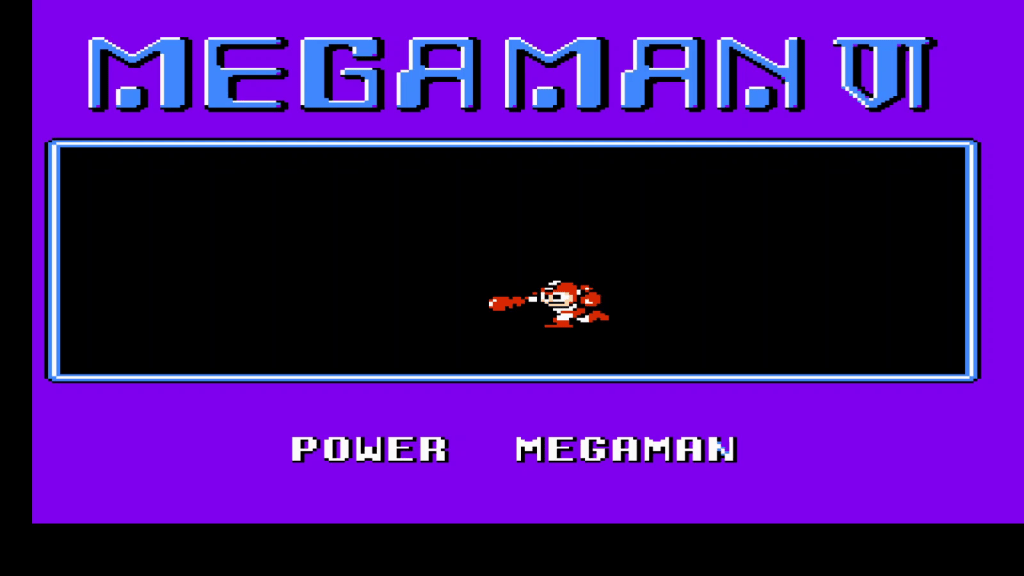
Defeating Flame Man will also earn you the Rush Power Adapter. This is a feature that, I will admit, is one of those “We’re running out of ideas” mechanics. So, someone at Capcom said, “What if… you could wear, like… your dog…?”
There are two Adapters that let Megaman fuse with his robot dog, Rush, to wear a suit of heavier armor that offers a special ability. The Power Adapter lets you charge up a short range punch attack which can destroy breakable blocks scattered throughout the levels, leading to extra goodies and secret paths. Even though it’s kind of a silly idea, the designers really make use of the Adapters; this one, as well as the flight-enabling Jet Adapter you receive later on, are required in a good majority of the levels to find alternate routes and secret items. I like them for the most part, besides the skippable cutscene you nevertheless have to start up every time you switch to one.
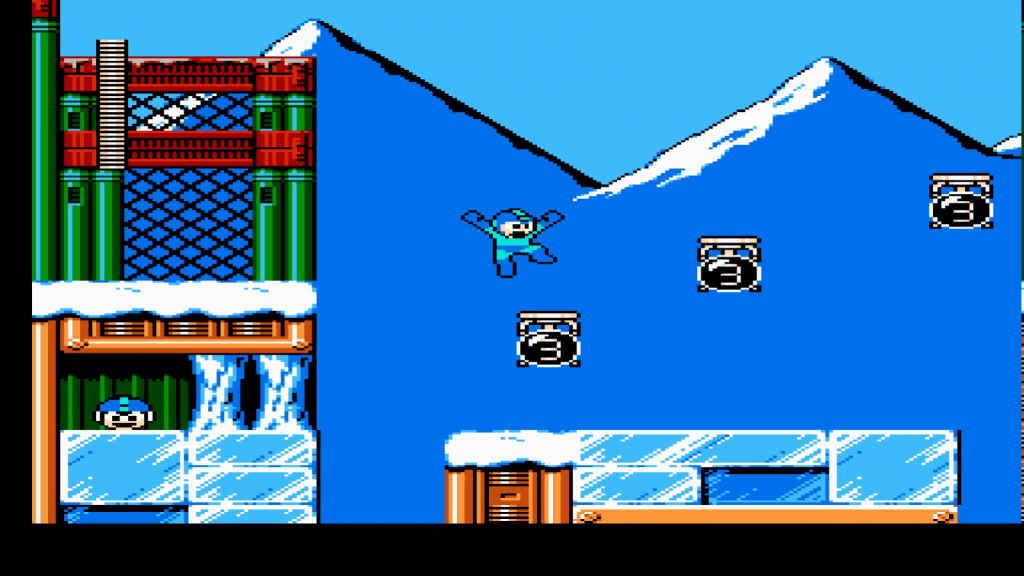
Who best to test out your new flame weapon on than Blizzard Man? His stage, set in a frosty Canada, is one of my favorites, not just for the sweet, oddly melancholy music, but the gorgeous ice theming and vibrant colors. The bright blues of a snowy mountain region contrast with green grates and walls of the interior, leading down to a cool section in an underground ice cavern complete with a submarine you need to cross that rises and falls with the tide. The submarine has these striking orange and pink summer colors, and if you’re good at chaining slides together, you can make it to a bonus Energy Tank, which gives you a one-time full health refill on demand.
Blizzard Man’s stage is surprisingly not too painful for an ice level. The slippery physics really tripped me up on the last screen before the boss room, but otherwise, even the odd, seemingly out of place switch-activated time bombs are a fun addition to the level. This is the point of the game where, despite having a special weapon, you will usually be wielding your default Mega Buster.
The Mega Buster is a staple of the series, being Megaman’s trademark “lemon” pellets fired from his arm cannon. You want to save your limited special weapon energy for the boss, and while there are pickups to refill it, it’s better to be safe than sorry. As such, the strength of the Mega Buster decides the toughness of a lot of the game.
This brings us to the all-important charge shot. Introduced in the fourth entry, the charge shot lets you hold down the fire button to power up a bigger, stronger blast. It was kind of middling in 4, and way over-tuned in 5, making the actual special weapons pale in comparison. 6 brings it down a little bit to a nice middle ground, being a tad smaller. Only three shots can be on screen at once, so your typical strategy is to save up a charged shot, then unleash it on an enemy before rapid firing into them from a closer range. It’s worth noting that getting hit at all will make you lose your charge, so it becomes a risk versus reward mechanic that incentivizes good positioning.
Next in the weakness chart is Plant Man, commonly believed to represent Brazil. He resides in a lush rain forest which is my least favorite stage in the game. Overall, it isn’t too bad, but there’s some things that really muck it up for me.
To know what I’m talking about, I want to mention a core fundamental element of game design called kishotenketsu. Don’t worry about pronouncing that.
In Japan, there’s a popular genre of comic strips known as 4-koma, or four panel, manga. These are, as the name would imply, gag strips that only take up four panels. How do you tell a story with such little space? And in a format that needs you to crank them out mere days from one another? The answer is,
Ki – Introduction
Sho – Development
Ten – Twist!
Ketsu – Conclusion
Or, kishotenketsu. This not only works wonders for story telling, it’s also a genius template to design your game around. Here’s the idea: You have a new obstacle you want your player to deal with. First, introduce it in a safe environment, where you let them make mistakes and figure out how it works organically. Next, ramp it up, add two of them, or some previously established element to make things a little tougher. Now, you need to throw them for a loop, take your obstacle and bend the rules a little. This should be the most difficult part, to make the player go “Oh, now I have to deal with that?!” But the key is that you’ve prepared them, given them time to deal with it and digest it, so they never feel unprepared and frustrated. After overcoming that, you let them down easy with the last instance, which should only be about as hard as the first. This makes a “victory lap” for your player, and caps off the whole experience.
Obviously, this is a simple explanation, and depending on how complex your game is, you can add as many steps of ramp-up in between, but the heart of it remains true. Once you understand this concept, you will see it everywhere, especially in Japanese games. It’s just a solid foundation, and feels natural to the player. Megaman makes extensive use of kishotenketsu starting from about halfway through Megaman 2. Be clear, establish the mechanic, develop the situation further, then toss them a curveball.
I bring this up only because there’s this part at the start of Plant Man’s stage I don’t like, because it kinda breaks this rule. See, there’s these little grasshopper enemies who stay low to the ground where your Mega Buster can’t hit unless it’s fully charged, and then they jump forward to attack you. The grasshoppers can hide behind the tall grass in some parts of the level, where they’re barely visible. For some reason, the first time you see the grasshopper will be when it’s already flying in your face, as it’s hidden behind the grass. Instead of first introducing the idea of the grass and grasshopper separately, it’s served to you hot and ready. It’s weird and I don’t like it.
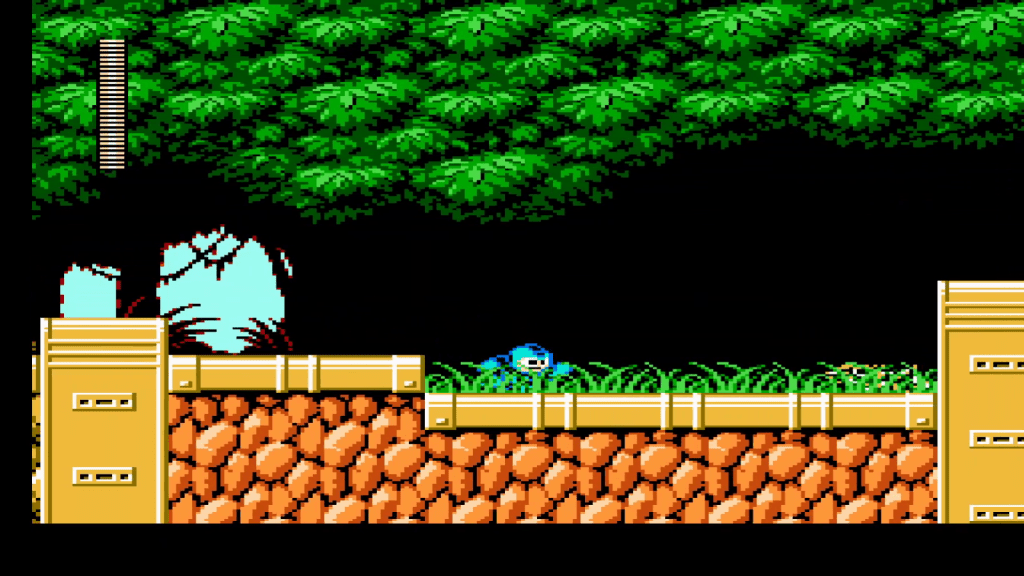
Other than that, there’ some other things that kinda bug me here. This brutal section with springs where you never quite know whether or not you timed it right to make the high jump, and then you have to platform across them over instant-death water, and fish jump out of the water and knock you out of the air, and-
Ugh. I wanna move on. Though there is this cute bit where they put the small health pickups in the trees over these flowers, so it looks like they’re little fruit. I like that, that’s very Megaman to me.
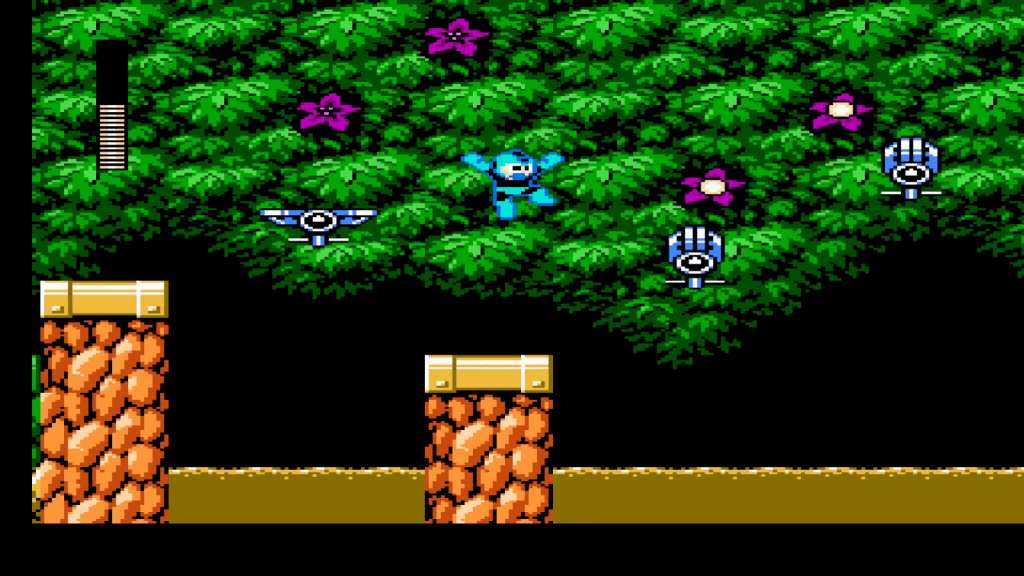
Tomahawk Man’s level is bliss. It’s awesome, I love everything about it. It opens in the American desert, a clear sky contrasts the bright orange-tan of the rock face Megaman finds himself standing on. There’s these enemies called Colton, and they’re these squat, green robot gunslingers whose forearm is a six-shooter pistol; he’s standing with his other hand dramatically lifted near his waist, as if to grab another gun, he even takes six shots to kill, just like the chambers of his weapon.
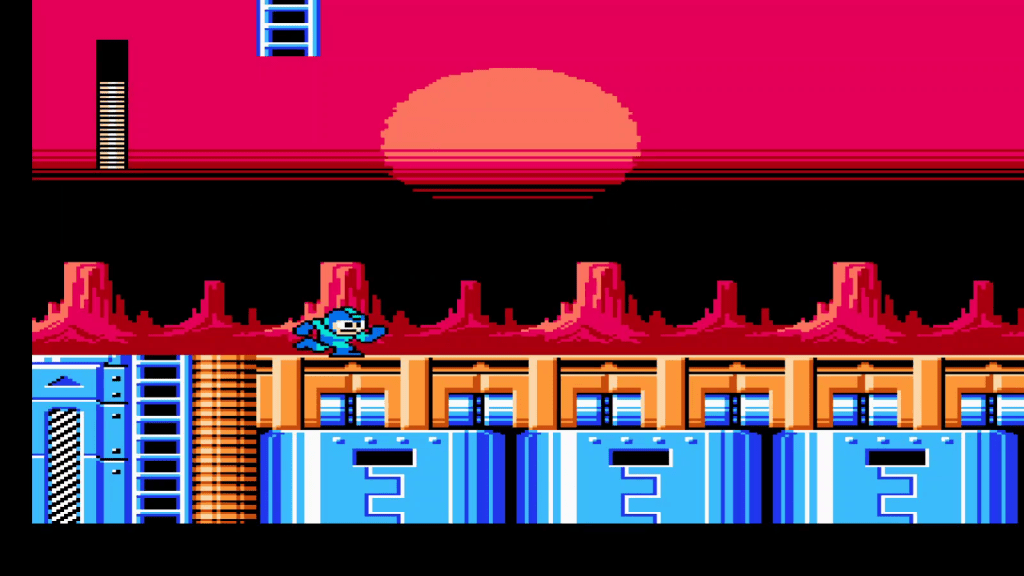
Megaman 6 has this trick, it’s a good trick, where you start out the level in some exterior setting to lay out the theme, then you go up or down into an interior, and finally emerge back outside. Almost every one of the Robot Master stages does this, and Tomahawk Man’s does it the best. You drop down a shaft into what’s presumably a mining operation, fight a pretty easy miniboss, then find a ladder up back to the surface, only to find that what was moments ago a clear late afternoon day has now become an absolutely gorgeous sunset. The whole background is painted in these red and orange shades, and it’s animated so that the sun actually has waves of heat distortion. Compare any of this to what was being done even with Megaman 2 or 3, and this game just blows it out of the water. The team at Capcom were so proficient with the NES hardware that they pushed it to its absolute limit in terms of polish.

This is also as good a time as any to talk about the alternate paths. I mentioned it before, but this is probably the first time you’ll run into one if you’re following the weakness order. After jumping back underground, you come to a fork in the road: one path is to jump atop a platform and progress as you would, the other challenges you to use the Jet Adapter to go underneath the platform and get to a different ladder. Both paths lead to Tomahawk Man, but only the alternate path accessible via the Adapters is the “true” battle. Winning one of these will net you one of four letters that spell out “Beat,” Megaman’s pet robot bird gifted to him by Dr. Cossack after Megaman 4. Collecting all four will let you summon him to attack enemies, but not bosses. I never use Beat, but it’s one way to 100% this game.
This isn’t even the first branching path in this level; there’s another obvious one when you come up to the sunset that you’ll need the Jet for. There’s multiple alternate routes in single levels that serve you extra challenges for rewards, it’s great.

Beating Tomahawk Man grants you the Silver Tomahawk, an extremely useful weapon that arcs upward and does good damage. This game’s weapons are a big step up from both 4 and 5, the former of which had a lot of “Shoots a thing in a straight line with some special property,” and the latter which just suffered from a lot of weak options. The weapons in 6 are almost designed like the items in classic Castlevania, where the designers recognized that your Mega Buster only being able to shoot straight ahead could be a serious weakness and capitalized on it by making enemies that are a pain in the neck to take care of without jumping around trying to line up your shot.
The Flame Blast lobs a small ball of fire in an arc that, upon touching the ground or a wall, rises up into a pillar of flame, making it useful against enemies below you. Blizzard Attack launches four snowflake projectiles that do sizable damage but are small with a large spread; it’s suspiciously similar to the Shotgun Ice weapon from Megaman X. Plant Man’s Plant Barrier is a shield. It’s alright, it’s a shield, which are usually hit-or-miss in this series. It can’t be thrown, but it does alright damage.
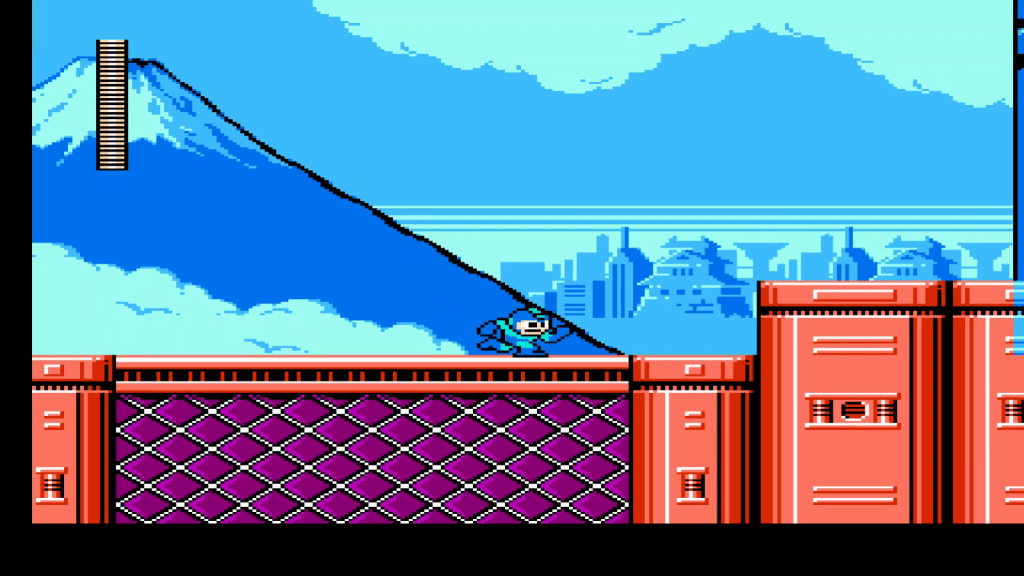
Next up is Yamato Man, a purple robot samurai with a spear whose tip he flings at you, then has to walk over to pick up, because this is a silly game. I love the look of his stage. The first screen hits you with- BAM! Mt. Fuji, before you enter into this purple and salmon colored fortress with green walls. The color scheme is very Megaman to me, which I know I probably say a lot about this game, but it really captures what I love about this franchise. These bold, bright colors, wielding the NES’ limited palette with the dexterity that comes from working on it for six years. There’s these tanuki enemies who literally throw giant balls at you-
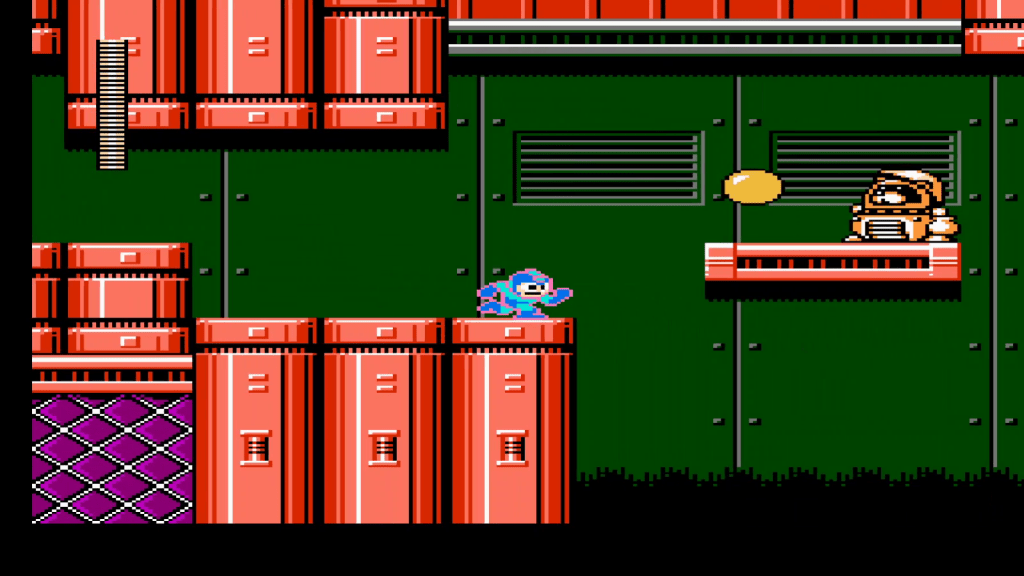
Sidenote: Tanukis are Japanese raccoon dogs, depicted in folklore as having gigantic testicles
You can go down an alternate path pretty early that takes you to a miniboss that’s a guy riding a giant mechanical frog and tossing bombs at you. The level starts to incorporate these mossy green cobblestone tiles that look really nice against the rest of the textures.
After Yamato Man comes Knight Man, generally believed to represent England or Germany. One thing I haven’t mentioned is this game’s boss introductions. Unlike any other game in the series, Megaman 6 gives you a quick stat sheet of the boss when you select their stage. It’s nothing actually gameplay relevant, things like weight, height, energy source, but you also get a fun title for each Robot Master as well as the name of their stage. Knight Man is the “Master of the Mace Ball” who resides in the “Capital of Science.”
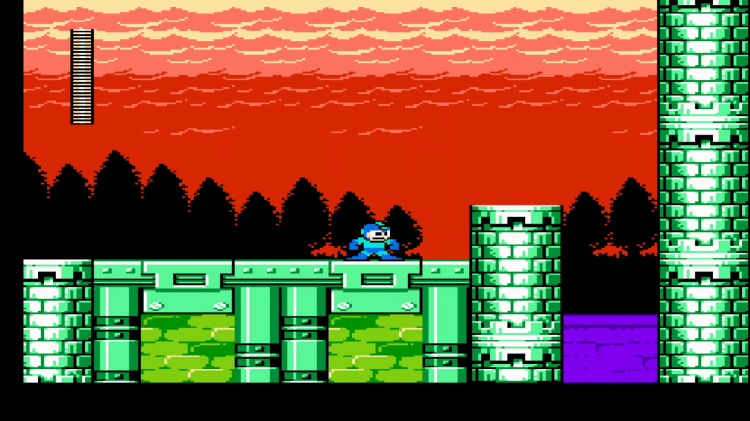

Maybe it’s mad science, because his level is in a castle. I love the first screen: Megaman standing in front of a drop into the fortress, which is a weird lime green and purple stone compound, against a late-day sky, the sunset casting warm colors over a thick bed of clouds, the trees pure black, silhouetted in the background. Interestingly, the colors of some stages change on revisit, and this one swaps for green pillars and fuschia walls. The sky turns gray, it feels like whatever once happened here is over.
The castle is filled with odd mechanisms and traps, like a spike ceiling that descends to the ground before lifting back up, requiring you to slide through to safe spots to make it through the room. There’s also platforms of rotating wheels that will send you flying in one direction if you aren’t careful, and a long room of bouncy floors and ceilings that gives me heart burn. Much like Tomahawk Man’s level, this one sees you climb a ladder back up to the castle roof, where it looks like a storm is brewing. After descending back down inside, you can see ancient stone walls giving way to reveal pipes and circuitry, maybe some science really is being done here?
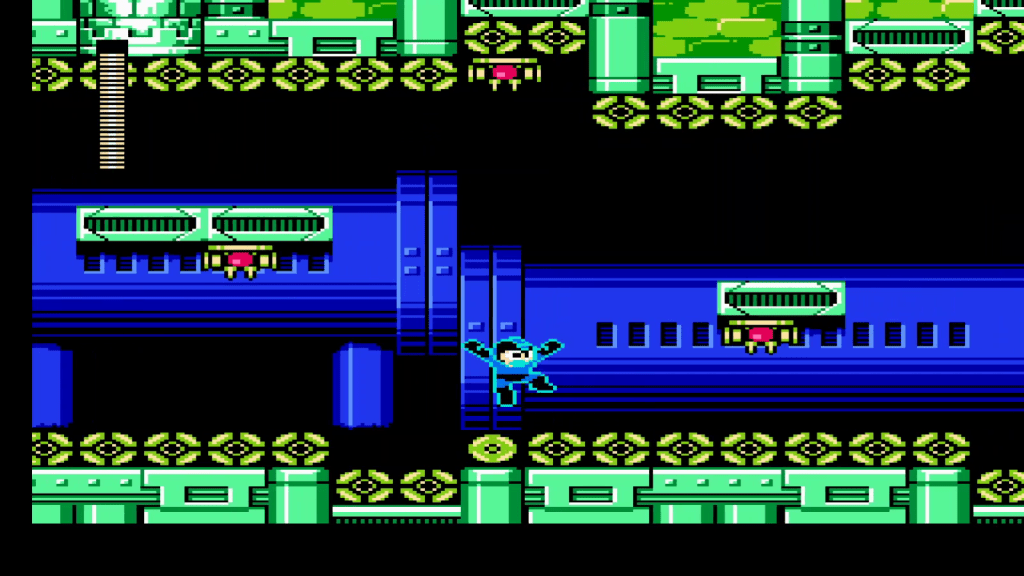
Centaur Man’s stage is this entry’s water level. That sounds bad, but Megaman actually skirts a lot of the problems with water levels, which are usually slow, boring, and have some kind of annoying limited breath mechanic. Not here; the folks at Capcom embraced the fact that Megaman is a super powered robot who can lift, like, six tons, and being underwater is basically like being on land, except you jump really high and descend slowly.
This level feels a bit like a hydro-electric plant mixed with a temple, what with all these tall pillars with machinery and waterfalls. It’s called the Ancient City, but I don’t know what city is supposed to look like this.

Remember what I said about kishotenketsu? Well, after doing lots of platforming above and underneath the water, you drop down a shaft and there’s water… above you? This whole long section has an antigravity gimmick where the water is on the ceiling, rising and falling, and you have to jump up into it to use the floaty moon physics to clear big pits you otherwise wouldn’t be able to. It’s super cool and creative and is just another one of the ways the levels in this game feel so much more dynamic than previous titles.

Near the end of the stage, you encounter these enemies that are clouds with propellers at the end and little periscopes sticking out of the top. If you shoot them, you blow away the cloud and reveal it to be a submarine with googly eyes that falls down into the water and shoots at you.
Nothing to say about it, just wanted to mention.
Centaur Man himself has one of the more interesting fights in the game. The Classic series suffers from this problem where Robot Masters take way too much damage from their weakness weapons, and most of the time you don’t even have to learn their pattern, you just bum rush them until they explode. Robot Masters tend to have simpler attack and movement patterns in general compared to, say, the Mavericks from the X series.
The half-horse, half-man, all robot, however, has a neat time stopping ability, after which he shoots a plasma ball at the wall that bounces back, splitting into seven shots. If you get frozen in the wrong spot, you’ll fall right into the path of damage. This adds a little bit more strategy to the fight; I wonder if it was at all inspired by DIO of JoJo’s Bizarre Adventure, whose own time-stop projectiles are pretty iconic in Japanese pop culture.
The Centaur Flash (abbreviated to C. Flash, which could never be misinterpreted) is this game’s screen nuke. A little uninteresting, but useful nonetheless. It uses surprisingly sparse energy for clearing a whole screen’s worth of enemies. Centaur Man’s weakness, the Knight Crush, is one of my favorites to use, a mace that travels in a misshapen loop before returning to you, and can be aimed forward, up, or down in front of you.
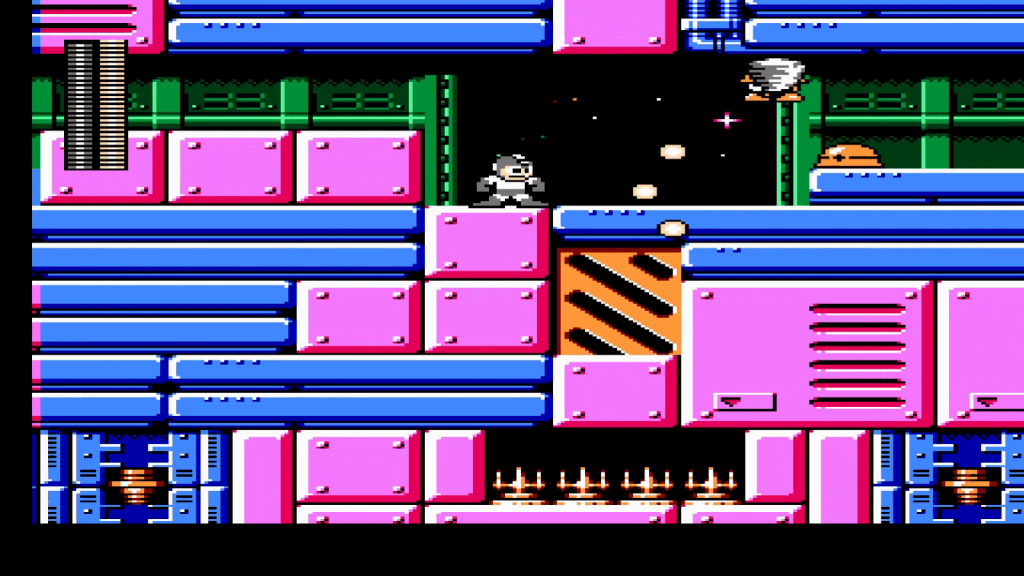
The weapon of the final Robot Master in this run is Wind Man’s Wind Storm, which makes me laugh every time I use it. Megaman fires a little tornado, which kills enemies not by tearing through them, but by whisking them away, up to the top of the screen.
I don’t have much to say about Wind Man’s stage itself. It has a neat progression, climbing a large tower before crossing a treacherous series of platforms to descend a second tower. There are two unique elements here, fans that blow you up or down, and platforms that flip like a lid to face the other way when you jump on them. The fans are used for some tricky platforming challenges, but the flipping platforms go under-utilized for how stressful they are to jump across over bottomless pits.
Wind Man himself is a pushover. His weakness is literally a weapon that hits the entire screen for massive damage, so his fight is brainless.
Now it’s time to face Dr. Wily Mr. X!
Mr. X Stage 1 is everything that I love about this game. Just hearing the music, this sweet, melancholy song, the way it builds into these big percussion hits then subsides back to the beginning. God, they knew that when Yuko Takehara handed them this track that they had gold, because they reuse it about two more times. File this under “Awesome, Weirdly Somber Songs from Megaman Games,” along with Cossack 2, Megaman 2’s Epilogue, and Mega Water S. Yeah, from Wily Wars.
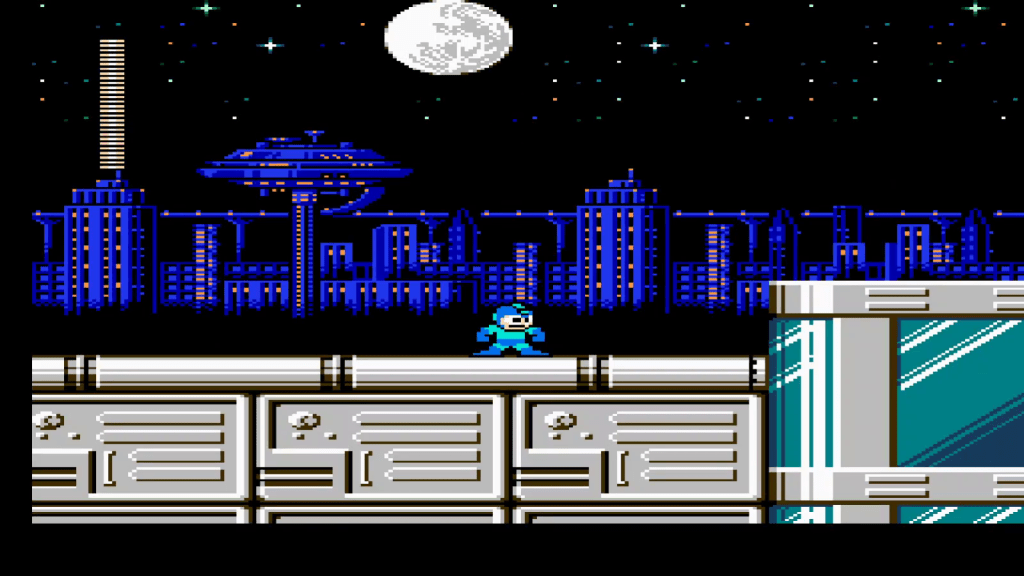
Because I haven’t praised this game’s art direction enough, I want to point out how wonderful the atmosphere is here. There’s a long, futuristic city skyline lit in dark blue under a full moon and a sky overflowing with stars. It’s kind of an acknowledgement of the world these games take place in that’s subtle, but there. Paired with the background music, it takes on a melancholy quality. The windows are illuminated with warm orange lights; someone is up late, working or living. But Megaman can’t stop now, these are the people he’s fighting for the sake of.
Anyway.
You climb up a skyscraper and the skyline slips away from view. There’s… planets? Multiple planets visible in the background? Alright, sure.
At this point in Megaman games, the fortress levels, everything starts to open up from a design perspective. Because you can choose any of the Robot Master stages in any order, the level designers had to craft each stage as if you had nothing but your Buster. There are extra secrets and alternate paths, but nothing that requires you to have any other weapon or item. Now, all of the weapon getting and item picking is done, and you will have to use every tool at your disposal to make it through the fortress.
Multiple sections require the Adapters to cross chasms or find secrets, including one in the first Mr. X stage that gives me heart palpitations every time I do it.
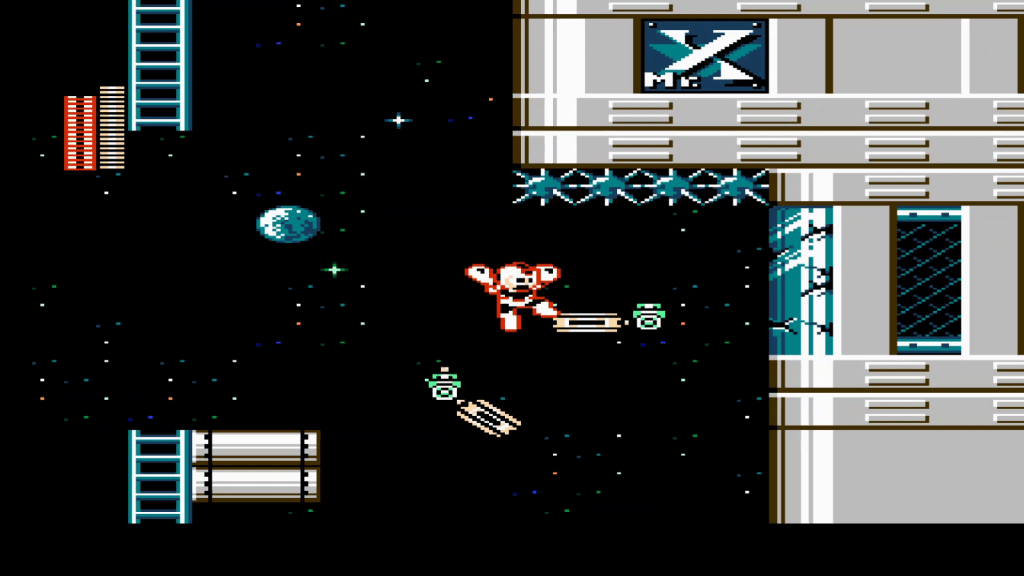
I don’t care for the boss of this stage; it’s these two robots that follow a track, but part of them is armored, and it’s hard to tell where, and they don’t really move except for sliding on the track, so it’s hard to know where they’re going or when you’re hitting them, it’s…
Eh…
Stage 2 is in space, apparently. It’s got a nice kishotenketsu example in the form of this pit you fall into and need the Jet to fly out of, then later they introduce spikes and enemies into the equation. Not much to say besides that. The boss has a nasty case of slooooow dooooown as it drops rocks from the ceiling that break apart, but every one of the NES Megaman games suffers from that when things get too hectic. This series has a lot of instances of pushing the bounds of polish and care in place of mechanics, and unfortunately that ambition outpaces the technology.
I didn’t even write notes for stages 3 and 4. There’s a lot of misdirection and you need the Jet Adapter if you don’t want the heart palpitations to come back in this part with the moving platforms, but it’s standard fare, throwing you lots of enemies during precarious platforming sections.
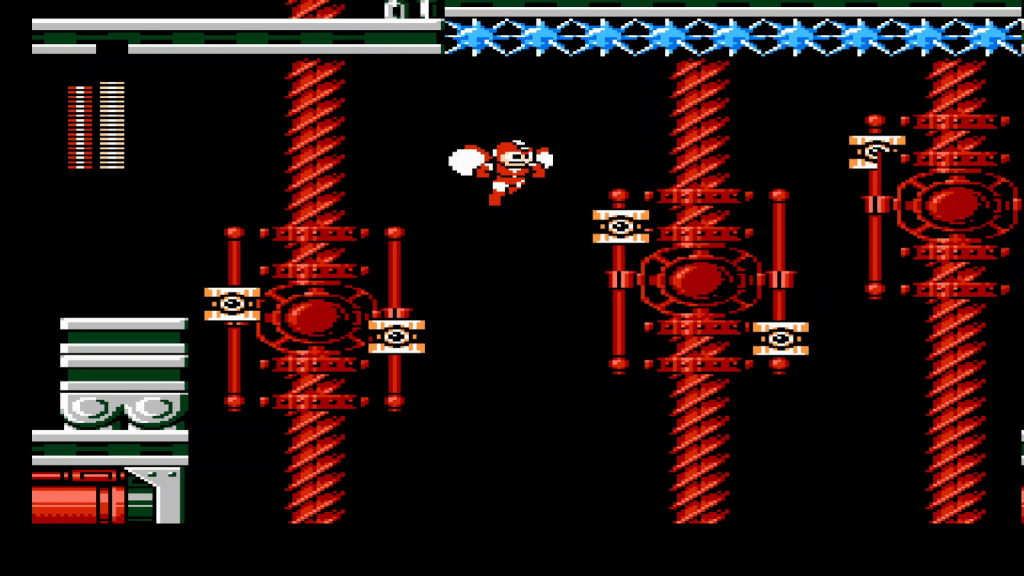
Surprise! It was Wily! Who could have guessed?
This leads straight into another four levels of… basically the same thing. There just isn’t a lot to say about it except this bit in stage 1 where you’re falling down a long shaft and have to weave through obnoxiously placed spike traps that you are constantly racing towards.
That’s some Quick Man s#!t. That’s some Rosenkreuzstilette s#!t. What’s Rosenkreuzstilette? Don’t look it up, don’t play it. I’m serious, I play Touhou games for fun, and that game made my hair go gray.

You make it to Wily, and he’s pretty easy. I think the easier difficulty is a combination of a few things. For one, this game hands out E-Tanks like British supermarkets selling beans in 1996. There’s one in almost every Robot Master level, and when the game actually starts getting tough during the fortress stages, you get a free refill on health before every boss. You usually won’t need it though, so I was facing Wily with nine of them, the max you can carry.
In addition, most enemy patterns aren’t crazy aggressive, and you can usually just spam them with their weaknesses.
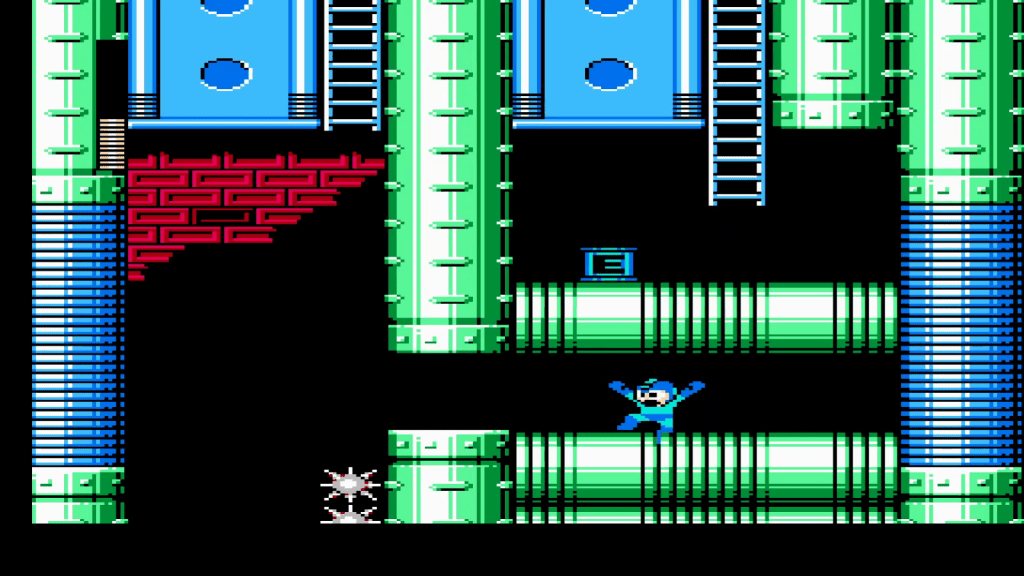
Some of the ease definitely comes from the fact that I’ve been playing these games for so long, and I can imagine a newcomer having trouble with a lot of portions of Megaman 6. Where this game really shines, however, isn’t in the supreme difficulty, it’s in the little things.
Remember when I said that this game didn’t change up the formula, it just did it special?
Nobody really detests the series as a whole. Most people you ask will agree that they’re, at the very least, solid action platformers. It’s the little details, however, that push it over the edge for diehard fans like myself.
Let me give you an example.
All the way back in 1987, in the first entry, if you stand still for a few seconds, Megaman blinks. That might not seem like it means much, but you have to understand how they did this. Sprites on the NES could only consist of four colors; Megaman’s body is a light blue and dark blue, and his face is made of beige, white, and black. Huh? How did they get that many colors? Noboyuki Matsushima, who programmed the graphics, actually used two different sprites for Megaman’s character. The body and face are separate, which is sometimes visible when they flash at different intervals after being hit. They could have just simplified the design, but that would detract from the character of Megaman. Despite being a robot who never speaks during gameplay, he has a surprising amount of personality; his iconic headfirst run, full of determination, the way he grimaces in pain when taking damage, the fact that he blinks.
What I love about Megaman is its spirit. The fact that the creators will put such little, insignificant touches to breathe just a tad more life into the world. The way that every enemy is some googley-eyed robot, the way Dr. Wily travels around in his little spaceship, lifting the top to poke his head out and flash his eyebrows to taunt you, the way that every boss is *something*-man. All of this belies an overarching story that takes place across hundreds, if not thousands of years between over 130 games, but the world never stops being bright and colorful, even when the Megaman X games touch on domestic robo-terrorism and the Zero series centers on mass robot genocide.
I belabor the art and music in this game a lot, because you kind of need to understand the whole experience of Megaman 6 to get why it’s so special to me. The amount of love and passion put into it encapsulates what is so great about this franchise in general.
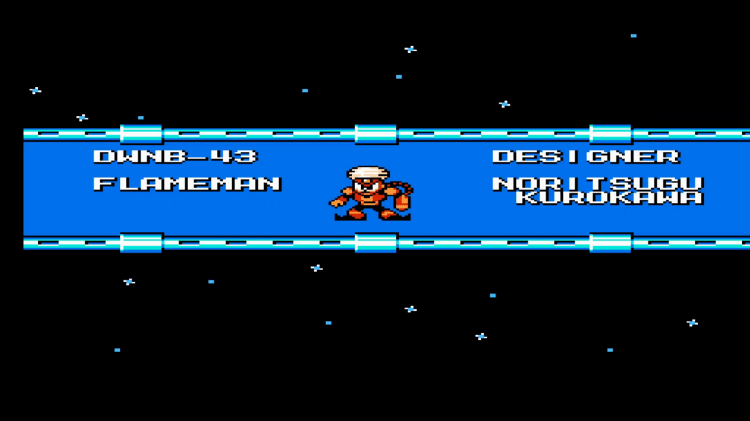
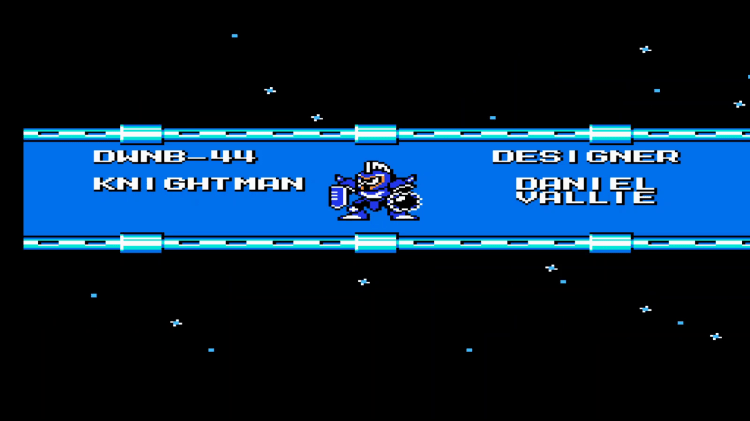
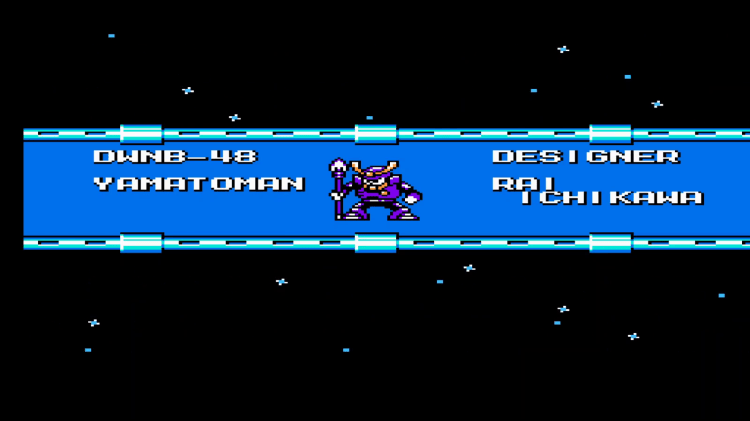
During the credits of every game, you get a recap of the cast, with each Robot Master doing their thing before freeze-framing as the name of their creator pops up. That name doesn’t belong to a Capcom employee, the Megaman team took in hundreds of pieces of fan mail from the children who so avidly played their games, and a large amount of those letters included drawings of their own original Robot Master designs. For every game after the first, they picked eight lucky fans to have their character included in the game after some touch-ups from the artists; a child’s drawing, etched permanently into pixels.




Megaman 6 doesn’t seem like a lot on the surface, it’s no Megaman Zero 3, but that’s forgivable because most games aren’t Megaman Zero 3. You can play it by way of a lot of different collections, and I’d recommend it to newcomers. It’s got some hard bits, but is a good introduction to the series. Maybe you’ll play it and think “That was cool,” and respect it for what it is; you’d probably enjoy the other games and the spinoff titles as well. But it might also be your introduction to the world of Megaman, and you’ll fall in love the same way I did when I was a kid.
 Taigen Moon Works